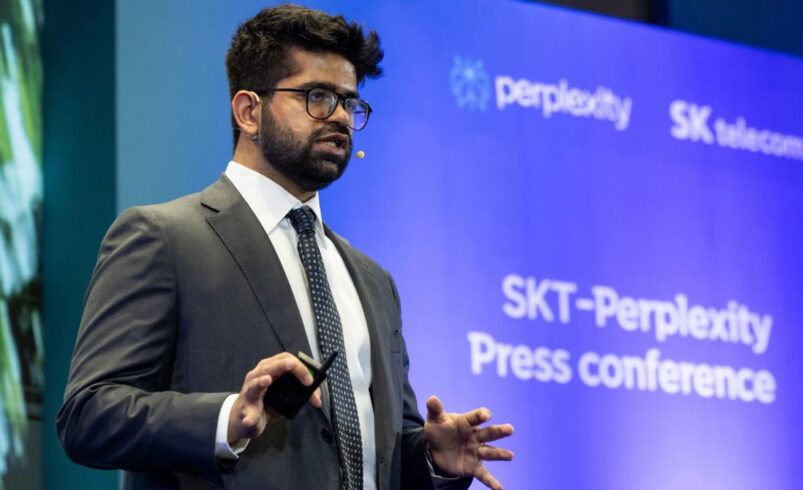
In a recent conversation on Raj Shamani’s podcast, Aravind Srinivas, founder and CEO of Perplexity AI, offered a bold vision for India’s AI future. Rather than merely using artificial intelligence to boost individual productivity or chase digital “hacks,” he urged Indian entrepreneurs to think bigger. According to Srinivas, the real opportunity lies in creating entirely new AI-driven products that scale across millions of users and solve real-world problems. This approach, he argues, is what will truly lift India’s GDP, create jobs, and establish the country as a global AI leader.
Srinivas highlighted that India is already good at adopting new technologies, but adoption alone isn’t enough. The real challenge, he said, is to stop relying on shortcuts that save time and instead focus on building scalable businesses rooted in AI. From automating small tasks to launching completely AI-native platforms, the goal should be to create value that can be monetized and expanded across large audiences. This mindset shift from consumption to creation is essential for long-term economic transformation.
He specifically called out three sectors ripe for disruption with AI. In healthcare, AI agents can interpret diagnostic data, provide early risk assessments, and act as decision-support tools for overburdened doctors. This could improve outcomes in rural and underserved areas where medical expertise is scarce. In software development, code-completion tools and AI-assisted debugging can empower small teams and freelance developers to deliver high-quality products at scale. Meanwhile, in financial consulting, AI can democratize insights by analyzing market trends and offering real-time portfolio advice once only accessible to top-tier clients.
But the conversation wasn’t without caution. Srinivas warned that sectors dependent on repetitive tasks—like call centers and certain dev shops—are at immediate risk. He emphasized that business owners in these industries must be proactive and lead the disruption themselves before outside forces render them obsolete. As AI-powered voice agents and automation tools become increasingly sophisticated, the cost of inaction could be existential for these legacy operations.
Importantly, Srinivas believes disruption doesn’t have to mean destruction. The key, he said, is to use the savings and efficiencies generated by AI to reskill workers and transition them into roles aligned with the future of work. With proper planning and leadership, India can not only minimize job losses but actually emerge stronger, with a workforce ready for new kinds of high-value roles that AI itself enables.
Srinivas’s message is clear: India must move beyond passive AI usage and embrace active, product-driven innovation. It’s not about doing old things faster—it’s about doing new things better. If Indian startups and enterprises can answer this call, the country won’t just be part of the AI wave—it will help shape its direction.
Get the latest in business, markets, startups, and policy—visit businessnewsindia.in for in-depth updates and follow us on Instagram @businessnewsindia.in for daily bites of what matters most.
Source – Business Today