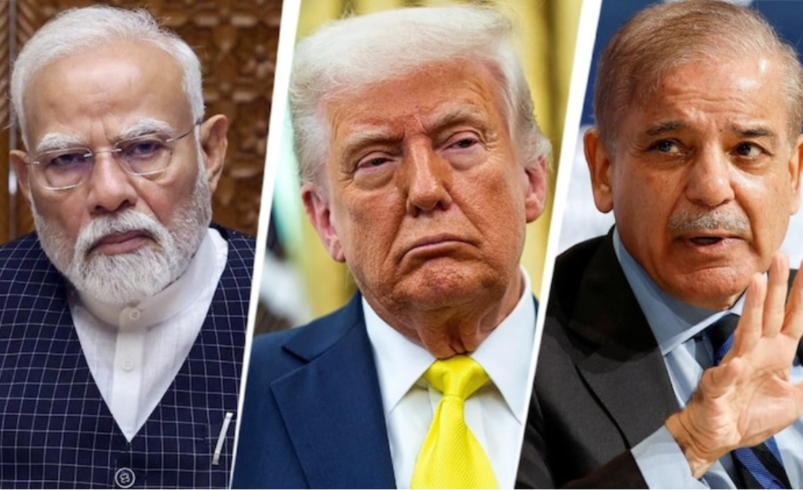
Former US President Donald Trump is once again positioning himself as a global mediator, this time offering to host Indian Prime Minister Narendra Modi and Pakistani Prime Minister Shehbaz Sharif for a “peace dinner.” In a public statement, Trump emphasized his belief that personal diplomacy could bring leaders together, ease geopolitical tensions, and potentially foster a renewed dialogue between India and Pakistan. While this isn’t the first time Trump has attempted to insert himself into South Asian diplomacy, the timing—amid rising tensions between the nuclear-armed neighbours—adds a dramatic twist to his peace proposal.
Timing Amid Escalating India-Pakistan Hostilities
Trump’s offer comes at a particularly sensitive time, following India’s Operation Sindoor and Pakistan’s retaliatory rhetoric. With tensions high along the Line of Control and heightened military readiness on both sides, the proposal has caught the attention of global observers. Many question whether a casual dinner, even hosted by a former US president, can impact entrenched hostilities fueled by decades of conflict, terrorism, and diplomatic distrust. Yet Trump’s approach, relying on optics and spectacle, continues to draw headlines and stir debate.
Mixed Reactions in South Asia and Beyond
The reaction from Indian and Pakistani political circles has been measured. While neither side has officially responded to Trump’s offer, insiders suggest that both governments are focused on national security and regional strategy rather than symbolic gestures. Indian media outlets have largely treated the proposal as another example of Trump’s flair for showmanship, while Pakistani analysts are divided—some see it as a chance for global legitimacy, while others view it with skepticism. Internationally, diplomatic experts remain doubtful of the dinner’s potential to produce any meaningful change.
Trump’s Track Record with South Asia
During his presidency, Trump had previously offered to mediate between India and Pakistan, an offer that India firmly declined, citing the Simla Agreement which mandates bilateral resolution of disputes. However, Trump’s close rapport with Modi and his outreach to Pakistan’s leadership continue to fuel his belief that he can play a constructive role. His suggestion of a dinner, rather than formal negotiations, aligns with his preference for unconventional diplomacy—relying more on personal chemistry than protocol or policy.
Symbolism vs Substance in International Relations
At its core, Trump’s dinner proposal symbolizes the persistent hope that dialogue—however informal—can be a starting point for peace. Yet history has shown that real change between India and Pakistan requires more than gestures; it demands mutual trust, verifiable commitments, and often third-party pressure in backchannel negotiations. While Trump’s peacemaker pitch may generate media buzz, the effectiveness of such diplomacy will ultimately be measured by actions on the ground, not dinner conversations in Washington.
Get the latest in business, markets, startups, and policy—visit businessnewsindia.in for in-depth updates and follow us on Instagram @businessnewsindia.in for daily bites of what matters most.
Source : indiatvnews.com