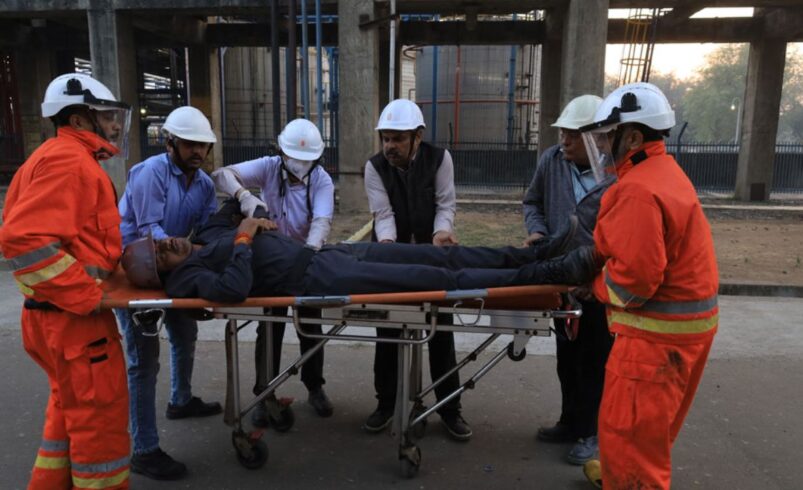
In light of rising Indo-Pak tensions and heightened security concerns, the Ministry of Home Affairs (MHA) has ordered a nationwide civil defence mock drill on May 7. This exercise is being carried out under the Civil Defence Rules of 1968 and is the first of its scale since the 1971 war with Pakistan. The primary goal is to assess India’s readiness in handling hostile situations such as aerial strikes, coordinated terrorist attacks, or chemical emergencies. The drill focuses on identifying gaps in preparedness, testing communication systems, and training civilians on emergency responses. It will also measure the coordination between state disaster response forces, fire departments, medical units, and civil defence teams. The mock drill has become a vital component of national security planning, especially amid recent provocations along the border.
Simulating a Real Crisis: What to Expect on May 7
On the day of the drill, people in 244 officially designated ‘civil defence districts’ can expect multiple simulations to mimic emergency scenarios. These may include air raid sirens, brief blackouts, communication disruptions, and mock evacuations. Camouflage of vital installations, traffic diversions, and public announcements will also be part of the exercise. Participants will include civil defence wardens, home guards, police, paramilitary units, and volunteers from organisations like NCC, NSS, and NYKS. In urban and high-risk areas, school and college students will also join as observers or participants. The entire operation aims to stress-test infrastructure, identify flaws in emergency protocols, and promote awareness among citizens about wartime procedures. It’s not just a test for authorities but also a valuable lesson in preparedness for the public.
Objectives Behind the Massive Preparedness Drive
The mock drill has several well-defined objectives. It is designed to train civilians in essential civil defence techniques such as seeking cover during air raids, responding to chemical leaks, or evacuating a building during a crisis. Another key goal is to assess how effectively shadow control centres, hotline communication with the Indian Air Force, and early warning systems function under stress. Blackout procedures and camouflage protocols for critical power and defence installations will also be implemented to test responsiveness. Furthermore, it evaluates how well emergency services — like firefighting, rescue, and ambulance systems — perform under simulated attack conditions. With the growing threat of hybrid warfare, such drills are a proactive measure to minimise panic and maximise efficiency if a real attack were ever to occur.
Key Safety Guidelines for Citizens
While these drills are simulations, they are designed to feel real, which makes following safety protocols crucial. Citizens are advised to stay calm and avoid panic when they hear sirens or experience blackouts. Official updates will be available through TV, radio, and government social media handles. People should avoid restricted areas, follow all instructions from authorities, and cooperate with civil defence personnel during drills. Families are encouraged to prepare basic emergency kits containing water, flashlights, radios, and first-aid supplies. Mobile services may be briefly disrupted, and traffic rerouting should be expected in select zones. The message from the government is clear: treat the drill seriously, not fearfully. It is a chance to build national resilience and individual awareness.
Strategic Importance Amid Regional Tensions
The backdrop of this drill is India’s strong and multi-layered response to the recent Pahalgam terror attack, which claimed 26 lives. Along with diplomatic actions like suspending the Indus Waters Treaty and cross-border trade, India has granted the military full operational freedom to respond to such provocations. Operation Sindoor, a precision strike against terror camps in Pakistan and PoK, has already showcased India’s active stance. Now, this civil defence drill adds a domestic dimension to national security. It sends a strong message — India is not only prepared to strike when required but also to defend its civilians in case of conflict. By involving ordinary citizens, the government ensures that preparedness is not just a military responsibility but a collective national effort.
Get the latest in business, markets, startups, and policy—visit businessnewsindia.in for in-depth updates and follow us on Instagram @businessnewsindia.in for daily bites of what matters most.
Source – business-standard.com