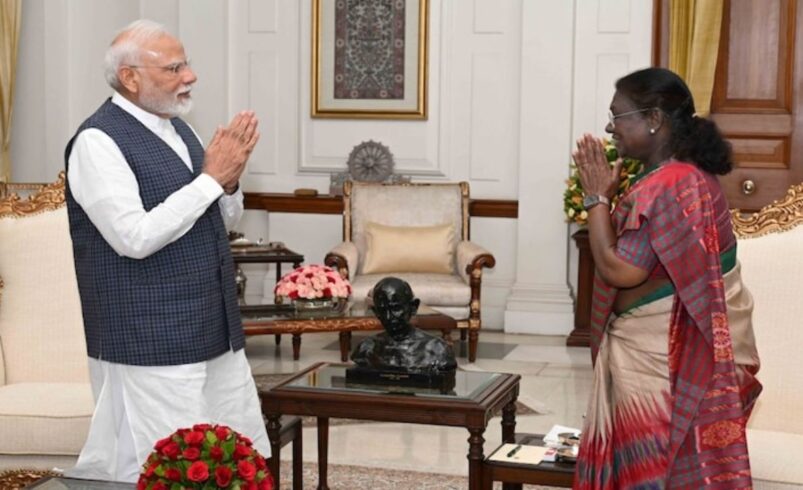
In a significant development following the brutal Pahalgam terror attack, Prime Minister Narendra Modi met with President Droupadi Murmu to brief her on Operation Sindoor — a targeted military strike against terror camps in Pakistan and Pakistan-occupied Kashmir (PoK). This operation was launched in response to the April 22 attack in Pahalgam, which killed 26 civilians, including one Nepali national. The Indian government’s response was swift and strategic, aimed at dismantling the infrastructure of terrorism across the border. During the briefing, PM Modi updated President Murmu on the execution, outcomes, and the calculated nature of the strikes. The meeting underscores the gravity of the situation and the seriousness with which the Indian leadership is addressing cross-border terrorism.
Nine Terror Sites Neutralized in Pakistan and PoK
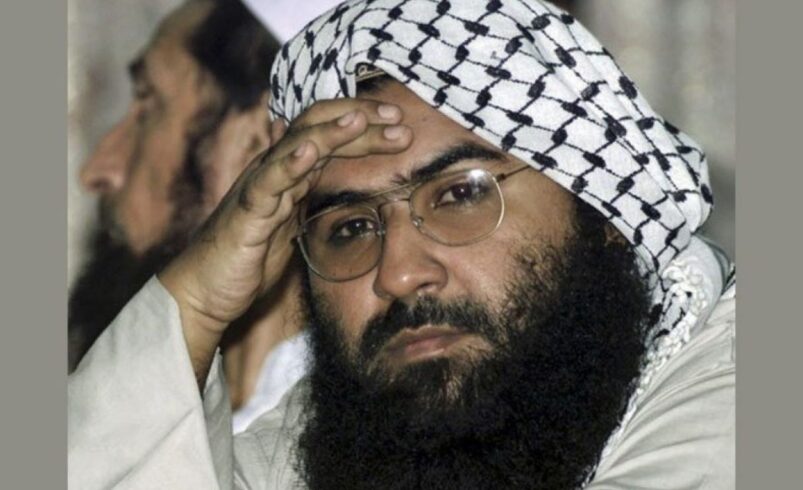
Under Operation Sindoor, the Indian Armed Forces conducted precision strikes on nine terror-linked facilities associated with notorious groups like Lashkar-e-Taiba (LeT) and Jaish-e-Mohammed (JeM). These included both headquarters and training centres actively involved in plotting attacks against India. The strikes were carried out in the early hours of Wednesday and spanned across locations within Pakistan’s territory and PoK. Each target was selected based on detailed intelligence reports, ensuring maximum impact with minimal collateral damage. By focusing solely on terror infrastructure, India maintained a defensive posture, steering clear of civilian and military installations, and reinforcing its commitment to responsible retaliation.
President Murmu Briefed at Rashtrapati Bhavan
Prime Minister Modi’s visit to Rashtrapati Bhavan highlights the institutional protocol and democratic process that governs India’s national security decisions. The President’s office confirmed the meeting via an official post on social media, also sharing images of the discussion. While the contents of the briefing remain classified, the public acknowledgment of the meeting signals transparency and coordination at the highest levels of governance. It also demonstrates that the decision-making around such operations is thorough, deliberate, and backed by the nation’s constitutional framework. The meeting served both as a formal update and a symbolic reassurance of unity between the executive and the ceremonial head of state during national crises.
Operation Sindoor: Precision, Purpose, and Patriotism
Operation Sindoor is not only a tactical success but also a message of resolve to terror outfits and their sponsors. It showcases India’s evolving defense doctrine, where pre-emptive and retaliatory strikes form an integral part of the counter-terror strategy. The armed forces were meticulous in their execution, ensuring no civilian areas were impacted and targeting only verified terror facilities. According to government sources, the operation disrupted ongoing terror training and planning activities, sending a clear warning to Pakistan-based groups. The Indian Army’s statement — “Justice is served. Jai Hind.” — captured the national sentiment and reflected the pride and precision with which the operation was carried out.
The Road Ahead: Security, Diplomacy, and Vigilance
Following the strikes, India has reinforced border surveillance and heightened internal security, especially in sensitive regions. Union Home Minister Amit Shah convened a high-level meeting with the chief ministers and police chiefs of border states to review preparedness. On the diplomatic front, India is maintaining open communication with key global partners while urging international pressure on Pakistan to dismantle terror networks on its soil. At the same time, Pakistan’s temporary closure of airspace and the Kartarpur corridor signals concern and disruption within its borders. As India moves forward, the balance of firm military action and strategic diplomacy will be key in safeguarding national interests and preserving regional stability.
Get the latest in business, markets, startups, and policy—visit businessnewsindia.in for in-depth updates and follow us on Instagram @businessnewsindia.in for daily bites of what matters most.
Source – India Today