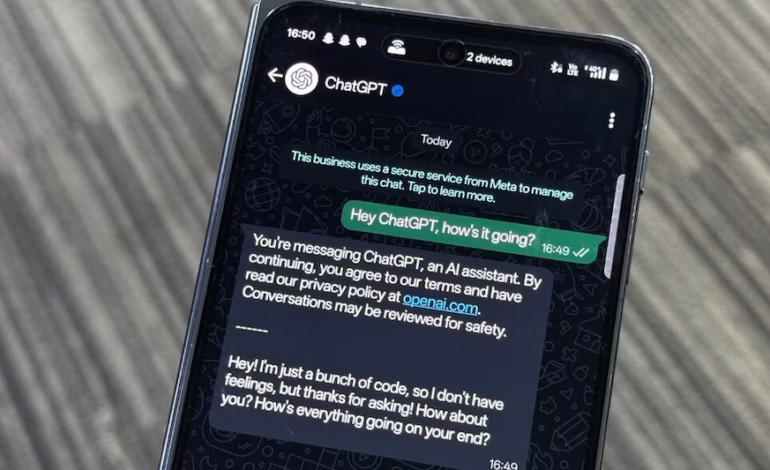
OpenAI has just made an exciting update to its ChatGPT functionality on WhatsApp. What started as a text-based interaction tool in December 2024 has now evolved to allow users to send images and voice messages directly to the AI chatbot. This feature promises to significantly enhance user experience by offering more intuitive, seamless ways to communicate with ChatGPT. In this blog, we will dive deeper into how this feature works and its potential impact on both users and businesses alike.
The Evolution of ChatGPT on WhatsApp
Initially launched in December 2024, ChatGPT on WhatsApp provided users with a platform to chat with the AI via text. However, with the latest update, OpenAI has taken it a step further by enabling users to send images and voice notes to the chatbot. This change makes communication even more interactive and accessible, eliminating the need to type out long queries.
Users can now upload an image or send a voice message to ChatGPT, which will then respond via text. While the AI still doesn’t generate images or respond with voice messages at this stage, the ability to process images and voice notes brings a new dimension to the interaction. Let’s explore how these updates work and what they mean for users.
How Image Inputs Work on WhatsApp
With the new update, users can now send images to ChatGPT. The chatbot uses OpenAI’s advanced computer vision technology to analyze the image and respond with relevant, context-specific information. This capability can be used in various ways, such as asking questions about the content of the image, seeking object recognition, or even rating memes.
For example, you could send an image of a landscape and ask ChatGPT about the geographical location or environmental factors. Similarly, you can share a product image and ask for a review or product details. This feature is especially helpful for those who want quick answers without having to type a detailed query. However, users should be mindful when sharing sensitive or personal images, as these will be processed on OpenAI’s servers.
Voice Message Support: A New Era of Hands-Free Interaction
In addition to images, ChatGPT now supports voice messages. This new feature allows users to send a recorded audio note instead of typing out a message. Whether you are on the go, engaged in other tasks, or simply prefer speaking over typing, this feature makes interacting with the chatbot more convenient and hands-free.
Once a voice message is sent, ChatGPT transcribes and processes the content, providing a text-based response. This removes the need for lengthy typing, which can be a time-consuming task for many users. The voice message support opens up possibilities for a more dynamic and effortless interaction with AI, especially in situations where typing isn’t ideal.
Potential Benefits for Users and Businesses
For Users
Seamless Communication: By enabling users to send both images and voice messages, OpenAI is providing a more flexible and seamless communication experience. It’s no longer just about typing text queries, but engaging with the AI in ways that feel more natural and efficient.
Increased Accessibility: For those who find it difficult to type lengthy queries or have visual content they need help with, these new features make ChatGPT more accessible. The ability to interact via voice and images removes barriers for people with different communication preferences.
Enhanced User Engagement: These updates also offer a more engaging way to use the AI. Whether it’s analyzing an image or responding to voice commands, users are more likely to engage with a chatbot that provides instant, relevant responses based on various types of input.
For Businesses
Customer Support Transformation: With the image and voice message capabilities, businesses can offer enhanced customer support via ChatGPT on WhatsApp. For instance, customers can send images of faulty products or voice messages describing their issues, and the AI can provide immediate assistance or escalate the issue to a human representative if needed.
Improved Product Discovery: Companies can use ChatGPT to help customers discover products. For example, users can send pictures of a product, and ChatGPT can provide more information, suggest similar products, or guide them through the purchasing process.
Boosted Interaction: The ability to use multimedia inputs can help businesses drive more interaction on WhatsApp. With voice and images, companies can encourage more users to engage with their services, boosting both customer satisfaction and sales.
Personalized Experiences: Businesses can leverage ChatGPT’s ability to analyze images and voice messages to offer personalized experiences. For instance, if a user shares a picture of a fashion item, ChatGPT can suggest related styles, sizes, or brands.
Privacy and Security Considerations
As with any new technology, there are privacy concerns to be mindful of. Since images and voice messages are processed by OpenAI’s servers, there is the potential for sensitive data to be exposed. Users should be cautious about sending personal or confidential information via images or voice messages, especially when using the service for business-related interactions.
OpenAI has assured users that it is taking necessary steps to ensure the privacy and security of its users, but it’s always important to be mindful of the data shared with AI systems. Businesses should also ensure that their use of this technology complies with privacy regulations and guidelines, especially if customer data is involved.
Future Features and Updates: What’s Next?
The current update is just the beginning of what could be a broader shift in how users interact with AI on platforms like WhatsApp. OpenAI may introduce further enhancements, including the ability to respond with voice messages, allowing for a two-way conversation that feels even more natural.
Additionally, OpenAI is reportedly working on a sign-in feature for ChatGPT on WhatsApp. This would allow users to sync their chat history across devices, providing a more consistent experience between the WhatsApp platform, the ChatGPT app, and the web client. While details on this feature remain limited, it could be a game-changer for businesses and users who need continuity in their interactions.
Stay tuned for more updates on this rapidly evolving technology!