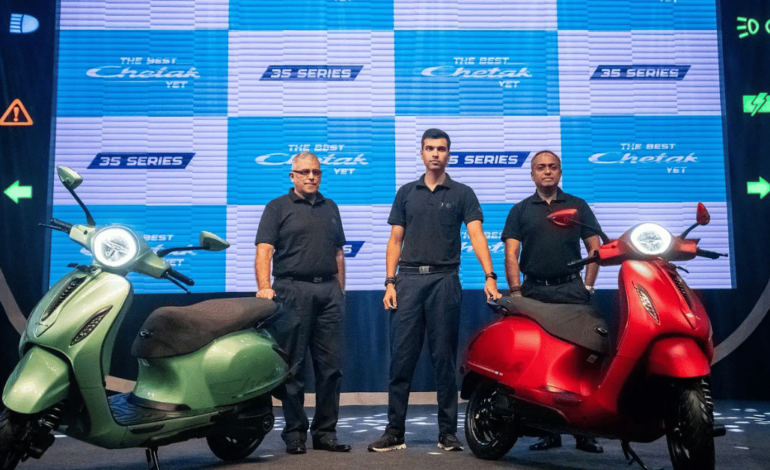
In an exciting development for the electric vehicle (EV) industry, Bajaj Auto, one of India’s leading automobile manufacturers, has launched two new electric variants of its iconic Chetak scooter. This announcement marks a significant stride in Bajaj Auto’s EV ambitions and caters to the growing demand for sustainable mobility solutions. The newly launched Chetak 35-Series is poised to compete in the burgeoning electric two-wheeler segment in India, where competition among key players is intensifying.
This blog delves into the details of the new launches, their impact on the EV market, and Bajaj Auto’s strategic plans to dominate the segment.
The Chetak 35-Series
The 35-Series of the Chetak scooter comes in two variants priced between INR 1.2 Lakh and INR 1.27 Lakh. The pricing positions these scooters as premium offerings, designed to appeal to urban commuters looking for sustainable and stylish mobility options.
Key Features of the 35-Series:
- Lighter Design: The scooters boast a sleek, lightweight design, enhancing maneuverability and making them suitable for urban commuting.
- Improved Battery Capacity: The new 3.5 kWh battery ensures longer rides, catering to daily commuters and reducing range anxiety.
- Enhanced Technology: Bajaj Auto has incorporated advanced features to offer a seamless riding experience, including connected tech to monitor performance.
With these features, Bajaj Auto is not just competing on price but also delivering on quality and innovation to solidify its presence in the EV space.
Expanding Horizons: Export Plans and Production Scaling
Bajaj Auto has ambitious plans to take the Chetak 35-Series to international markets. Starting in Q1 FY25, the company aims to export the scooters to over a dozen global markets. The exports will include both premium and affordable variants, enabling Bajaj to cater to a wide range of consumers worldwide.
Production Goals:
To meet rising demand, Bajaj Auto is scaling up production to 60,000 units per month over the next three months. This rapid increase in manufacturing capacity demonstrates the company’s commitment to addressing the growing appetite for EVs in both domestic and international markets.
Rakesh Sharma, Executive Director of Bajaj Auto, highlighted the company’s focus on expanding globally, stating, “We are definitely looking at exports of the Chetak 35-Series. Exports can begin within the next 6 months or so.”
Rising Competition in the EV Market
The Indian EV market has been witnessing fierce competition as companies vie for dominance in the two-wheeler segment. Ola Electric recently launched affordable e-scooters targeting gig workers, while other players like Yulu continue to gain traction in urban mobility.
Bajaj’s Competitive Edge:
- Legacy and Brand Value: The Chetak scooter has a rich legacy and is a trusted brand among Indian consumers. The electric variants build upon this legacy while embracing modern technology.
- Focus on Multiple Segments: Bajaj Auto plans to launch more premium models and affordable variants to capture a diverse customer base, including potential offerings for delivery services.
- Sustainability: With growing awareness of climate change and government incentives for EVs, Bajaj’s focus on electric mobility aligns with consumer preferences for eco-friendly vehicles.
Challenges in the EV Market
While the prospects for EVs are promising, the industry faces several challenges:
- Declining Monthly Registrations: Post-festive season, electric two-wheeler registrations dropped by 18% month-on-month in November. However, year-on-year registrations rose by 23.5%, indicating long-term growth potential.
- Infrastructure Gaps: A lack of widespread charging infrastructure remains a hurdle for EV adoption, particularly in smaller cities and rural areas.
- High Initial Costs: Despite government subsidies, the upfront cost of EVs continues to deter price-sensitive consumers.
Bajaj Auto’s decision to introduce both premium and affordable versions of the Chetak 35-Series is a strategic move to address some of these challenges.
Strategic Moves for Market Dominance
To strengthen its foothold in the EV segment, Bajaj Auto has outlined a robust strategy:
- Innovation in Product Development: The company is investing heavily in research and development to create cutting-edge products that meet the needs of Indian consumers.
- Diverse Distribution Channels: Bajaj is leveraging multiple platforms, including its official website, quick commerce platforms like Zepto and Blinkit, and marketplaces such as Amazon and Flipkart, to make its products accessible to a broad audience.
- Targeting Niche Markets: By potentially launching a delivery-focused model, Bajaj can tap into the growing gig economy while catering to delivery professionals.
The Future of Electric Two-Wheelers in India
India’s EV market is poised for exponential growth, with the D2C market projected to reach $100 billion by 2025. The two-wheeler segment, in particular, is emerging as a critical driver of this growth.
Government Support:
- Subsidies and tax benefits are making EVs more affordable for consumers.
- Policies promoting local manufacturing and battery production are reducing dependence on imports.
Consumer Preferences:
- Increasing awareness of environmental issues is driving demand for sustainable transportation.
- Consumers are looking for vehicles that combine performance, technology, and affordability.
Bajaj Auto is well-positioned to capitalize on these trends, thanks to its innovative approach and strong brand equity.
Conclusion
The launch of the Chetak 35-Series marks a significant milestone for Bajaj Auto as it accelerates its transition towards electric mobility. By focusing on innovation, scaling production, and expanding globally, Bajaj is setting the stage for long-term success in the EV segment.
As competition heats up, the company’s ability to adapt to changing consumer demands and market dynamics will determine its position in the electric two-wheeler market. With its rich legacy and forward-thinking strategies, Bajaj Auto is well on its way to becoming a leader in sustainable mobility solutions.