The artificial intelligence (AI) landscape is witnessing an unprecedented shift, with new players emerging to challenge industry giants. One such disruptor is DeepSeek, a Chinese AI startup that has already made waves by competing with OpenAI’s ChatGPT. Now, the company is expanding its reach, potentially setting its sights on Google Search. But can DeepSeek truly challenge the search engine giant? Let’s explore its rise, technological advancements, and potential impact on the global AI ecosystem.
DeepSeek: A New AI Powerhouse
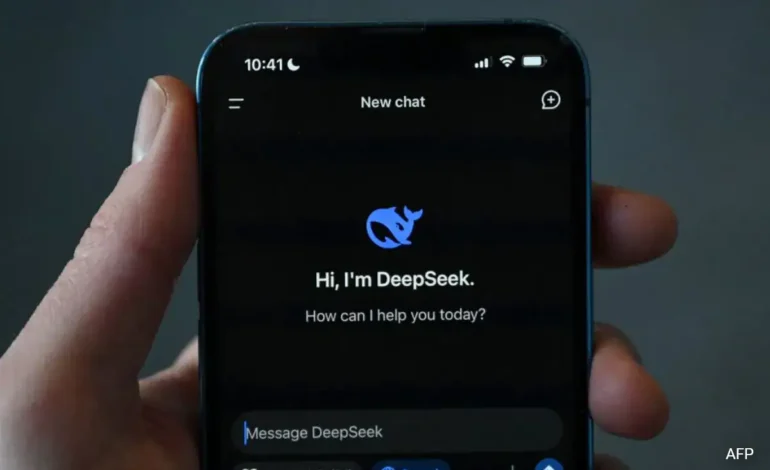
DeepSeek has quickly positioned itself as a strong contender in the AI space. The startup first gained attention with its AI assistant, DeepSeek R1, which operates at lower costs and requires less data than existing models. This efficiency has helped DeepSeek gain traction in China, where it has seen rapid adoption.
One of DeepSeek’s major advantages is its seamless integration into China’s biggest tech ecosystems. The company has formed strategic partnerships with industry leaders such as Tencent and Baidu, allowing its AI technology to be embedded into widely used platforms. Tencent’s Weixin (the Chinese version of WeChat) has over 1.38 billion users, and DeepSeek is being tested as a search tool within the app. This move signals a shift towards AI-powered search functionalities, which could potentially rival Google’s dominance in the search industry.
DeepSeek’s AI Search Capabilities
DeepSeek’s integration into Weixin and Baidu marks a significant step toward AI-driven search. Unlike traditional search engines that rely on indexing web pages, AI search tools can provide more intuitive, context-aware responses to user queries. This aligns with the growing trend of AI-powered search assistants, where users receive direct answers rather than a list of web links.
Baidu has also integrated DeepSeek’s AI technology into its own ecosystem, indicating that major Chinese tech firms are actively investing in AI-driven search capabilities. If successful, DeepSeek’s model could redefine the way people search for information, reducing dependence on traditional search engines like Google.
The Google Search vs. DeepSeek Battle
Google Search has long been the undisputed leader in the search engine market. However, AI-powered search tools are beginning to challenge Google’s traditional approach. OpenAI’s ChatGPT, Microsoft’s Copilot, and Google’s own AI-powered Bard are all evolving to provide AI-generated search results. Now, DeepSeek is entering the mix, offering a new approach with its efficient and cost-effective AI model.
Key Differences Between DeepSeek and Google Search:
Traditional Search vs AI-Driven Search: Google relies on indexing billions of web pages and ranking them based on relevance, while DeepSeek’s AI model generates direct answers using natural language processing.
Market Penetration: Google dominates Western markets, but DeepSeek has the advantage of deep integration within China’s digital ecosystem, where Google is not present.
Efficiency and Cost: DeepSeek’s AI model is designed to be more efficient and cost-effective, making it an attractive alternative for businesses and users in emerging markets.
What This Means for the Global AI Race
The rise of DeepSeek represents a significant shift in the AI industry. With Chinese tech giants backing its development, DeepSeek has the potential to become a key player in AI-powered search. While Google remains dominant, competition from companies like DeepSeek could accelerate innovation in search technology.
Potential Implications:
Increased Competition: Google may face greater pressure to improve its AI search capabilities to stay ahead of emerging competitors.
AI Adoption in Search Engines: Traditional search engines may evolve further to incorporate AI-powered responses, reducing reliance on traditional web indexing.
Regional Expansion: While DeepSeek is currently focused on China, its success could pave the way for international expansion, particularly in markets looking for alternatives to Google Search.
Will DeepSeek Challenge Google Globally?
While DeepSeek has made significant strides in AI development, whether it can directly challenge Google Search on a global scale remains uncertain. Google has the advantage of brand recognition, advanced AI infrastructure, and a massive global user base. However, DeepSeek’s rise highlights the growing demand for AI-driven search solutions, particularly in China and other emerging markets.
What to Watch:
DeepSeek’s Expansion Plans: If the company moves beyond China, it could become a more direct competitor to Google.
Further AI Innovations: Google, OpenAI, and other tech firms will likely continue enhancing AI-driven search models to maintain their competitive edge.
Regulatory Challenges: AI-powered search engines may face regulatory hurdles, particularly concerning data privacy and content moderation.
Source: businesstoday.in